
This is an excerpt from a book I have begun working on, a sort of travel adventure and self-help combo.
Last Autumn, Edwin and I journeyed to Ireland with two friends, Dan and Alex. Oddly enough, the onslaught of Covid created a perfect travel experience for us. Well, perfect once you got past the actual travel portion. There were unexpected $250 covid tests (goodbye savings!) required at the airport before departure, and a twelve-hour layover in Portugal’s gate arena. We attempted sleep in windowsills and on floors with mandated masks over our faces. We ate copious amounts of cheese, bread, and canned fish from Mundo Fantastico da Sardinha Portuguesa, “a space where the sardine is queen.” I’m sure my breath had never been worse.
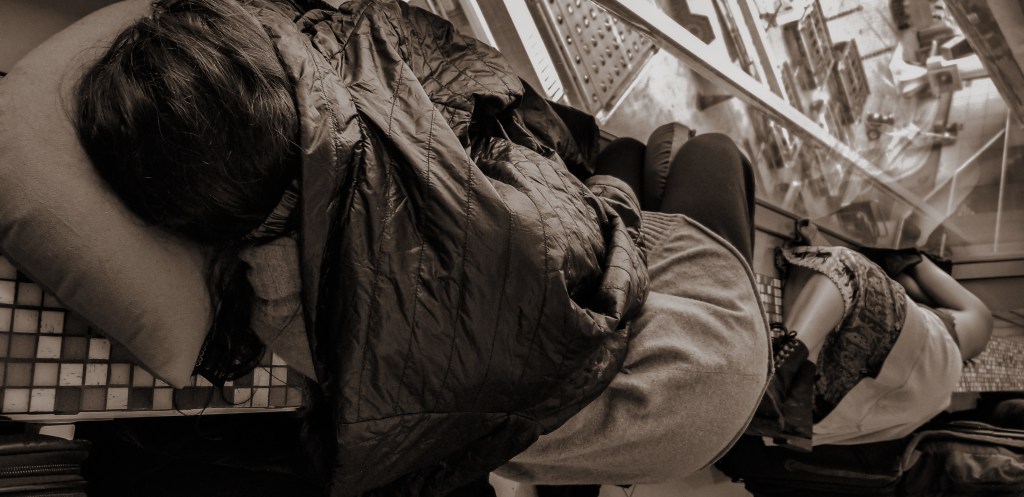
*Photo taken by Daniel Fong
On our first full day in Dublin, we took a brisk walk to Ireland’s Museum of Archaeology from breakfast, our bellies full of a savory beet, squash, and goat cheese tart (save for Edwin, who finds goat cheese abominable). There were no lines at the museum, and we could wander at our leisure. Amid the many remarkable exhibits was one titled ‘Kingship and Sacrifice – Iron Age Bog Bodies.’ Bog bodies, for the uninitiated, are human remains, naturally mummified and nearly perfectly preserved in fens and peat bogs near the sea. Peat, it seems, loves salty air as much as I do. The combination of highly acidic water, low temperatures, minimal oxygen, and a lack of drainage creates a delightfully anaerobic (meaning that the organisms required to initiate decomposition are almost entirely absent) environment.
Old peat is buried beneath a layer of newly forming peat, rotting in the dark and releasing humic acid. In this way, bog bodies are just very old human pickles. Those on display in The Museum of Archaeology lay on white plinths. Rectangular cloches of thick glass seal them inside, and strategically placed light fixtures illuminate each fold, hair, and fiber. My favorite among them lay with his legs tucked just a little, his arms folded across his abdomen. It looked as though he’d wanted to curl into a fetal position, but had lost the strength to do so at the end. Ridged and cracked fingernails were set deeply into the beds of his fingers. His skin was twisted and bunched at the elbows and armpits like a too-large suit of oilcloth. The muscles that once filled them had long-since deflated, save for those in the hands, which seemed almost swollen. He was the copper-brown color of dried dates, the analogy of that desert fruit at odds with the cold and watery graves which once housed him.
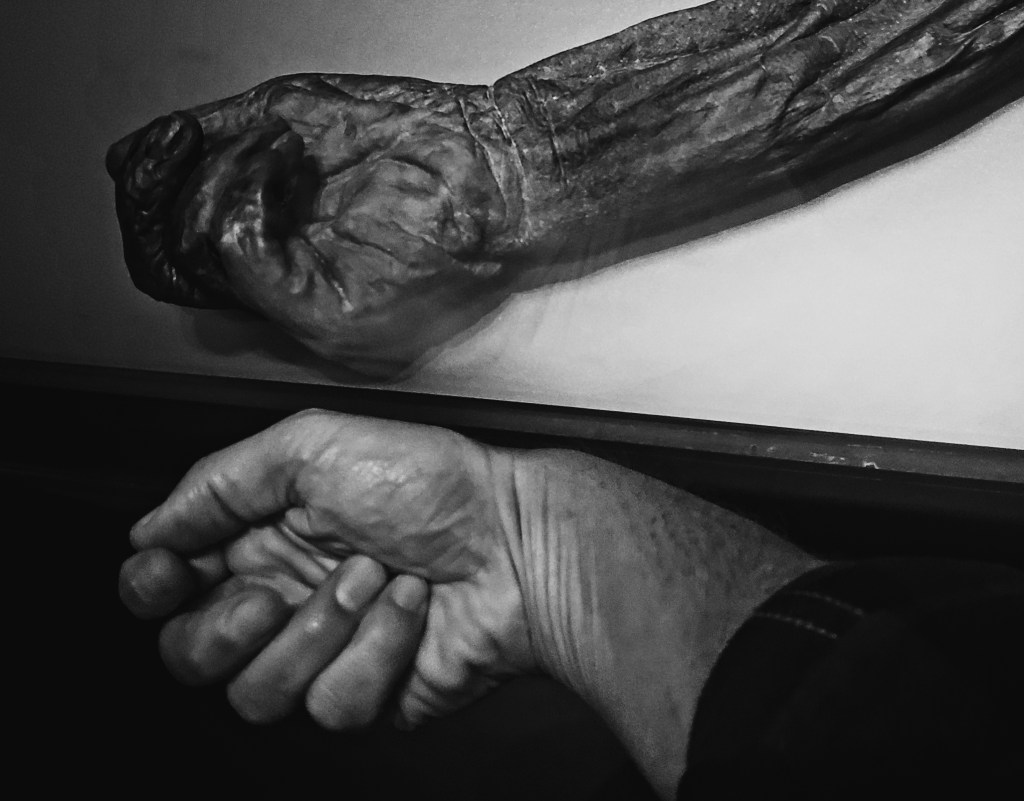
Despite their obvious humanity, these bodies didn’t quite feel real. They were certainly interesting, but time, glass boxes, and their rather deflated and rumpled nature made them feel alien. They could almost have been leather purses on display in an antique mall. This was not the way that people should look. Everyone in my party was young, healthy, and robust, and it was almost effortless to remove myself from these things and walk to the next exhibit.
As you read this, the relevance of bog bodies might seem dubious. ‘How do bog bodies tie into life changes or cataclysmic upheavals?’ you might be thinking. ‘I didn’t come here for a lesson in archaeology!’
I promise there is purpose here. Short months from now, this memory would surface and haunt my thoughts in a way that I didn’t think possible on a carefree vacation day. .
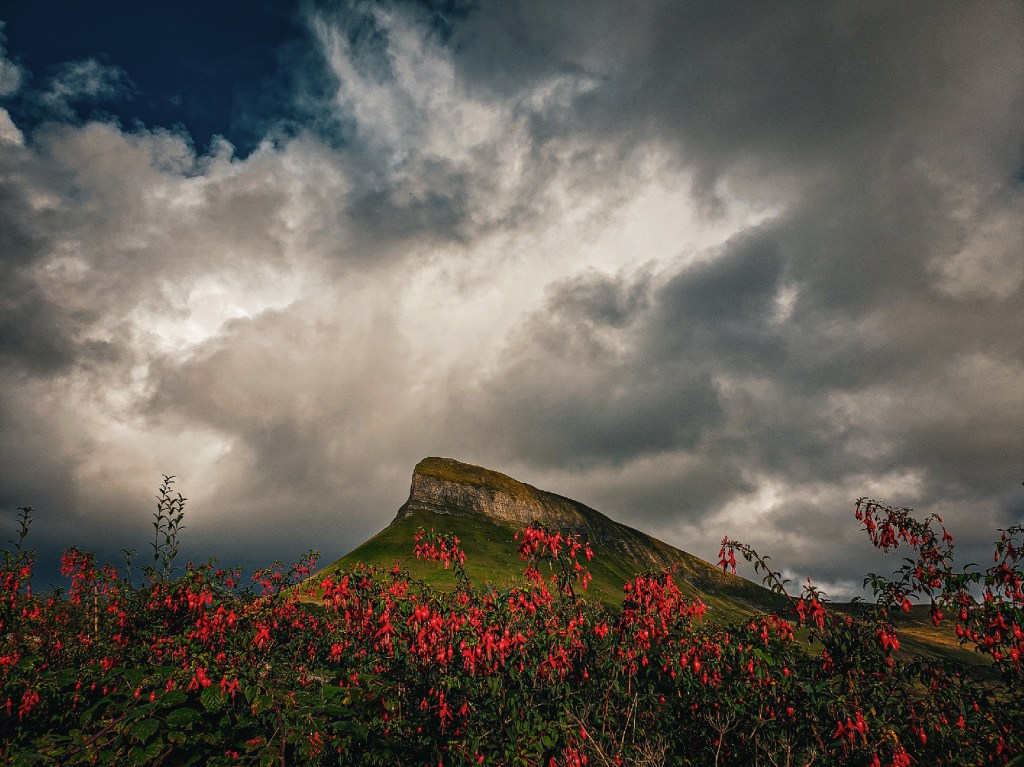
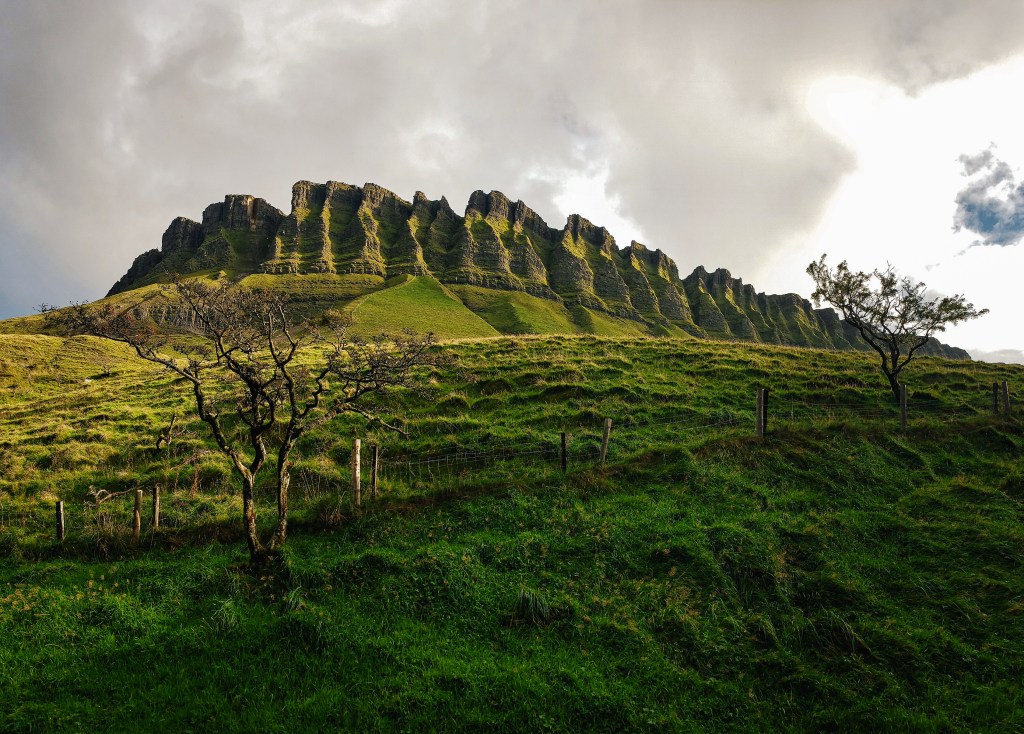
Later in our travels, we were driving from Donegal to Sligo when we spotted a hulking, flat-topped mound in the distance. Thumbing through our travel guide, we discovered that this was the famous mountain, Ben Bulben. Part of the Dartry range, Ben Bulben means ‘Gulban’s Head or Peak’ and takes its name from a Gaelic chieftain who, according to legend, was the youngest of three brothers, and the only one who was able to not only lift, but to carry the ‘Hero’s Stone’ up the mountain and back down again.
The hour was already well past midday, but the four of us had no real itinerary, having allowed events to unfold naturally for the most part. We decided to abandon the main road and do our best to find a way to the top of Ben Bulben and back before nightfall. With limited signal, we searched Google for nearby routes and after some degree of trial and error, we reached what seemed to be a likely start at the Gortarowey Forest Recreation Area. The sign outside touted it as one of the most botanically rich areas in all of Ireland, and the only area to have Chickweed Willowherb, Alpine Saxifrage, and Fringed Sandwort. Each of these is a scrubby wildflower variety with delicate white or pink petals. It is believed that Ben Bulben’s peak may have been a ‘nunataq,’ an ice-free prominence that stood above the glaciers, allowing life to cling to its top and survive the last Ice Age.
The Ben Bulben Loop Trail seemed to take us closest to what we sought, and at an easy five and a half kilometers, we estimated that it wouldn’t take more than an hour and a half if we kept a brisk pace. We set off with some water and our ever-present rain gear. I’d bought a black rain cloak before leaving the states, and felt rather dashing with it billowing in the ever-present wind. I have a terrible weakness for garments that drape and flow, likely developed at a young age from a plethora of fantasy and science fiction tales. Time Bandits, The Hobbit, Dune, Willow, The Borrowers, Redwall, and Star Wars to name a few. No hero was complete without his robe or cloak, and I never lost the child-like habit of daydreaming this or that outlandish fiction while in the wild.

A dirt and gravel road from the Gortarowey parking lot meandered through thickets of twisting shrubs and stone walls almost entirely overtaken by moss. Bun Bulben loomed above flora and fauna alike, and from this angle, the mountain was shaped like an anvil that had been left behind by one of Ireland’s famous giants. Blacksmiths, giant ones in particular, were often writ large in Irish folklore and were capable of cursing, curing, and creating charms. Turning an anvil’s point to the east seemed to be a textbook move for ill-intended invocations, so Ben Bulben’s decidedly west-facing northern point gave it a more benevolent air.
Emerging from our verdant tunnel, the landscape opened to reveal meadows of thick and tufted grasses, post fences, and a scattering of low trees around the base of the mountain. From there, it rose in a gentle, green slope dotted with sheep before sharply jutting upward in a grey and black spine. Deep crags rippled in a wild pattern as far as the eye could see. These ripples had been sculpted by melting glaciers during a time when a ‘sea beat against its perpendicular flanks’ and ‘there (were) treacherous holes, wherein more than one hunter may have been lost forever…and by listening one (could) hear the tides from the ocean three or four miles away surging in and out through ancient subterranean channels’ to quote Walter Evans-Wentz, an American anthropologist during the early 1900s.
The poet, W.B. Yeats, chose to be buried at the base of the mountain in Drumcliff near his grandfather, though it took nearly ten years to move his body from France to Ireland. In his poem, ‘Under Ben Bulben’, Yeats wrote,
“Swear by those horsemen, by those women,
Complexion and form prove superhuman,
That pale, long visaged company
That airs an immortality
Completeness of their passions won:
Now they ride the wintry dawn
Where Ben Bulben sets the scene…
Under bare Ben Bulben’s head
In Drumcliff churchyard Yeats is laid…
Long years ago; a church stands near,
By the road an ancient Cross.
No marble, no conventional phrase,
On limestone quarried near the spot
By his command these words are cut:
‘Cast a cold eye
On life, on death.
Horseman, pass by!’”
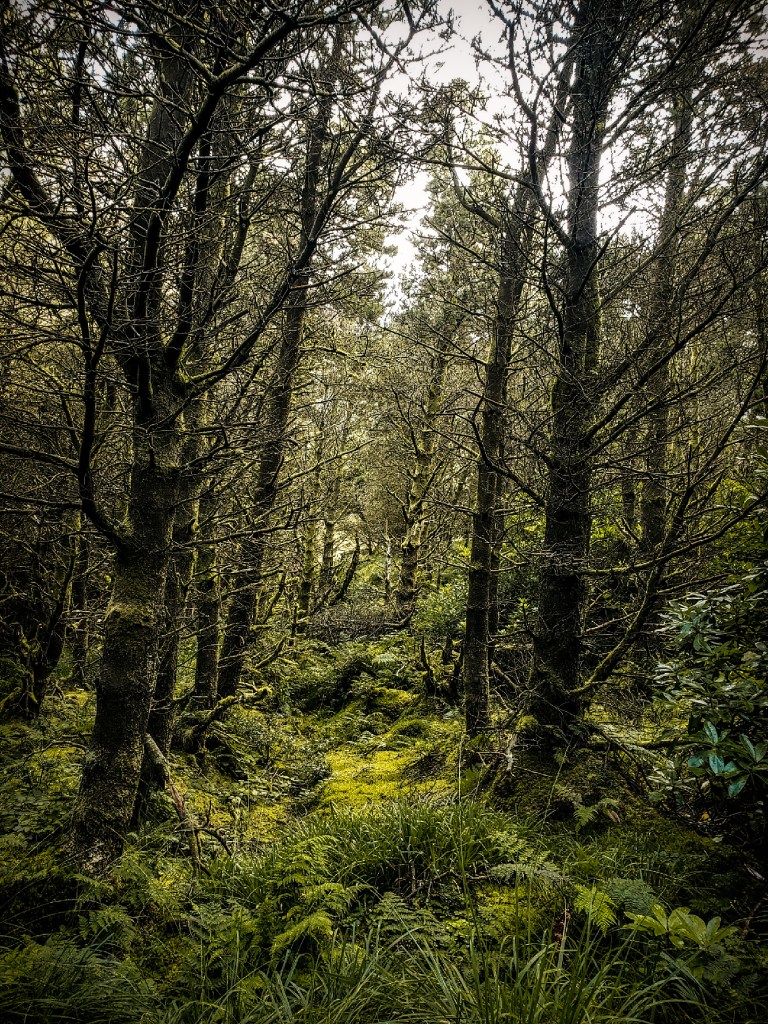
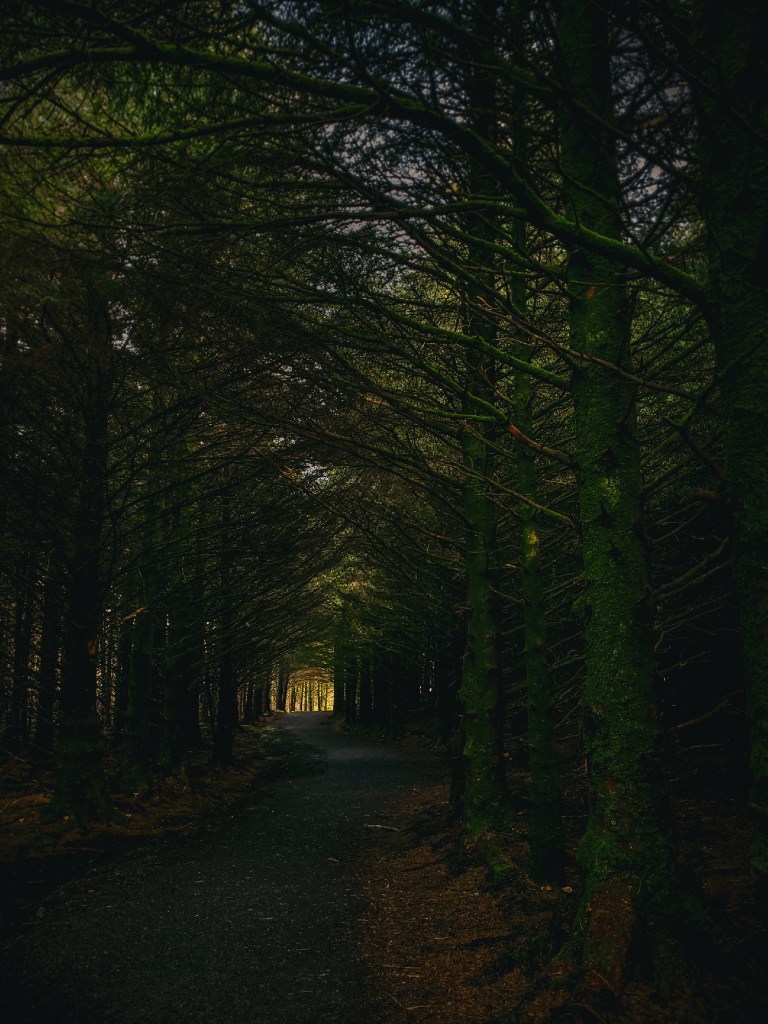
The trail took us through coniferous forest comprised of Sikta Spruce and Lodgepole Pine, both species chosen for their ability to withstand high water levels. Ireland has precious little forest left, and what is there has been planted in tidy rows for harvesting. When our path diverged from the mountain to double back, we diverged from it, cutting across country. We were careful to follow the rules laid out clearly on the sign at the start of our hike. We didn’t disturb the animals, stuck to durable ground, and followed tracks that had been carved out by herds and water. We left nothing behind and took nothing with us as we picked our way ever upward.
I should mention that there is a perfectly reasonable hiking trail to reach the top of Ben Bulben. It begins at Luke’s Bridge and climaxes at the North Face Spur, a fact that we discovered the next day after a bit of proper, Wi-Fi-fueled research. If you’re ever there, in spite of never having taken it, I highly recommend this trail. I’m sure it’s spectacular and not at all a disaster.
On this day, however, we didn’t have time to hunt about for alternate routes or drive to a new starting point. We traversed the rolling plain and up a series of steep, but quite manageable hills. Carboniferous limestone boulders littered the area, and the ruins of ancient quarries and hillside huts sat facing the spectacular view. Quilted farmland, wild bogs, wisps of scruffy forest, the island of Inishmurray, and Streedagh Beach stretched before us. Beyond them, across a patch of the North Atlantic Ocean, lurked the cliffs of Sliabh Liag.

We soon came to the realization that the gentle, green slope we’d seen at the start of our excursion was more of a steep forty-five to sixty degree angle depending upon which section of it we chose to ascend. Dan and Alex took a parallel route from the quarry with a more gradual grade, while Edwin and I cut across and then went straight at it. We quickly resorted to crawling, hand over hand, to each ledge worn flat by centuries of grazing animals. Out of breath and joking that perhaps we ought to have followed our friends, we did our best to avoid piles of sheep manure. Edwin took a detour to bring our two parties back together again, and I climbed ahead slowly, taking my time. I am very afraid of heights in general (I’m even afraid to jump up and grab the pull-up bar at the gym), but if I continue to look only upward and have reasonable hand holds, I can overcome it to an extent. My limbs shook, my breaths were shallow, and my heart beat wildly, but the desire to shriek and smash my face into the grass (a desire which would surely only result in a dirty mouth and some much bewildered sheep) was manageable.
I had ascended to the base of the steepest crags, and settled my back against stone, daring to look outward. The sun cast a golden glow over the land, and I could see rain over the ocean in the distance. All at once, without preamble, a rainbow appeared. It was incredibly round with each end visible where it seemed to touch the earth. No rainbow really touches the ground, for they are all circles. The higher you are, the more likely it is that you will see the real shape of whatever it is you’re looking at. Down low, we can only see that which is above our horizon, and unless you are standing side by side, at a level height with someone, no two people will ever see the same rainbow. Each person will have a different antisolar point, and a different horizon, changing the rainbow just a little bit in both depth of color and form.
The wind whipped my hair into a frenzy. Fossils in the limestone stood out in relief. Brachiopods, bryozoa, and caniniid corals littered their surfaces like a geologist’s confetti. Sheep gathered in smaller clusters up here, and the two nearest me had rainbow reflections in their soft brown eyes. Creamy-brown Liberty Cap mushrooms sprouted here and there in stacks of manure. This was a world made for gazing at. To quote Alex, it was ‘heckin’ high’ in every sense of the word.
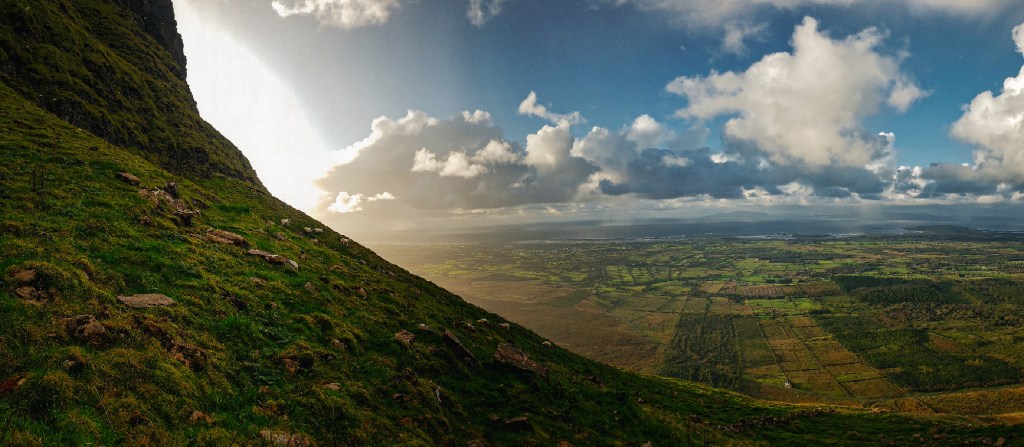
Ben Bulben maxes out at 1,726 feet of elevation, so in reality, the illusion of height was due more to most of Ireland being heckin’ low. I’d been on mountains eight times higher than this one, and would be on a mountain twice this height in a matter of days when we hiked to the peak of Carrauntoohil. I had been higher at 1,972 feet while hiking along One-Man’s Pass at Sliabh Liag several days earlier. Even so, Ben Bulben felt high.
A light mist began to fall. The rain over the ocean was moving inland, and the sky was going from golden to grey. Edwin shouted to me from the ledge below; it was time to head back. Without a proper trail to follow and in unfamiliar, steep terrain, it would be unwise to be caught on the stormy mountainside with twilight setting in. The most direct route to the flat land below followed a watery cut in the grass and stone. We slid, walked, and crab-crawled our way down, clinging to rocks and eventually, to a sheep farmer’s fence posts until we reached level ground.
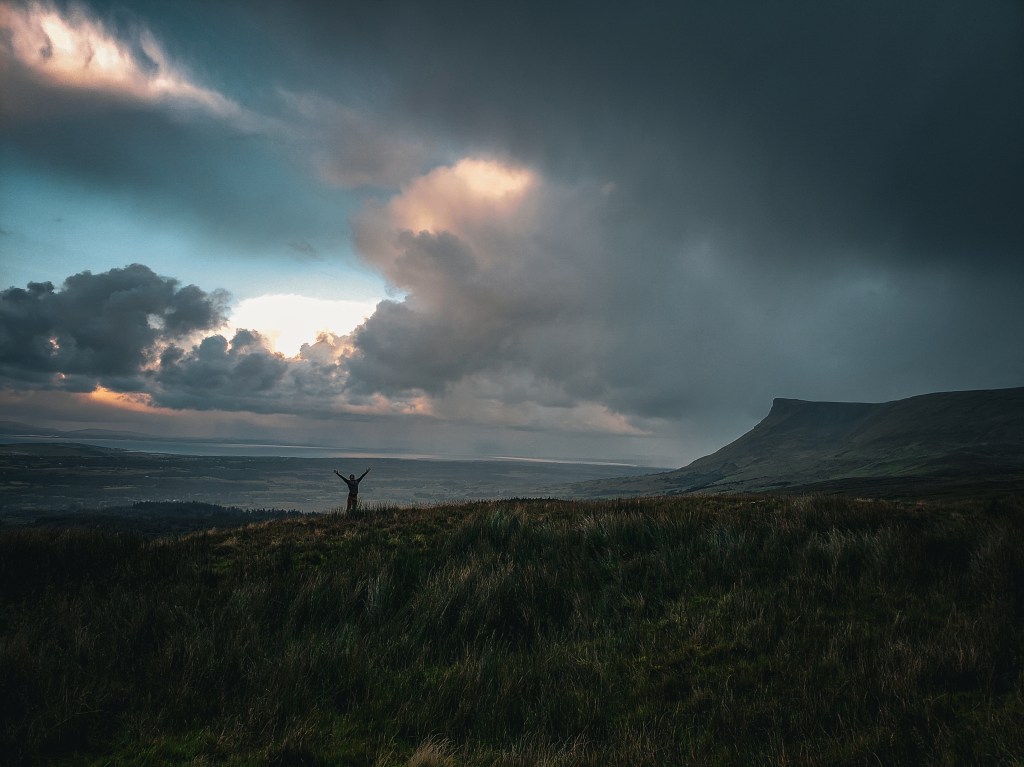
The rain was coming down in a blown drizzle now. To get back to the Ben Bulben Loop Trail we would need to cross several inches of standing water and a long stretch of private property. We opted to skirt the perimeter, not wanting to trespass without asking permission first. We kept to the fences and whatever high ground was available until we reached Ben Bulben Drive and followed it westward for a while, hoping that it might connect to the Forest Road and the Loop Trail. However, the gap between ourselves and the trail only widened as Ben Bulben Drive took a decided turn north. We hadn’t secured housing for the evening, and at this point we were cold and hungry. We would have to return to the trail immediately to avoid finishing up our hike in the dark, only now, several acres of bog separated us from our goal.
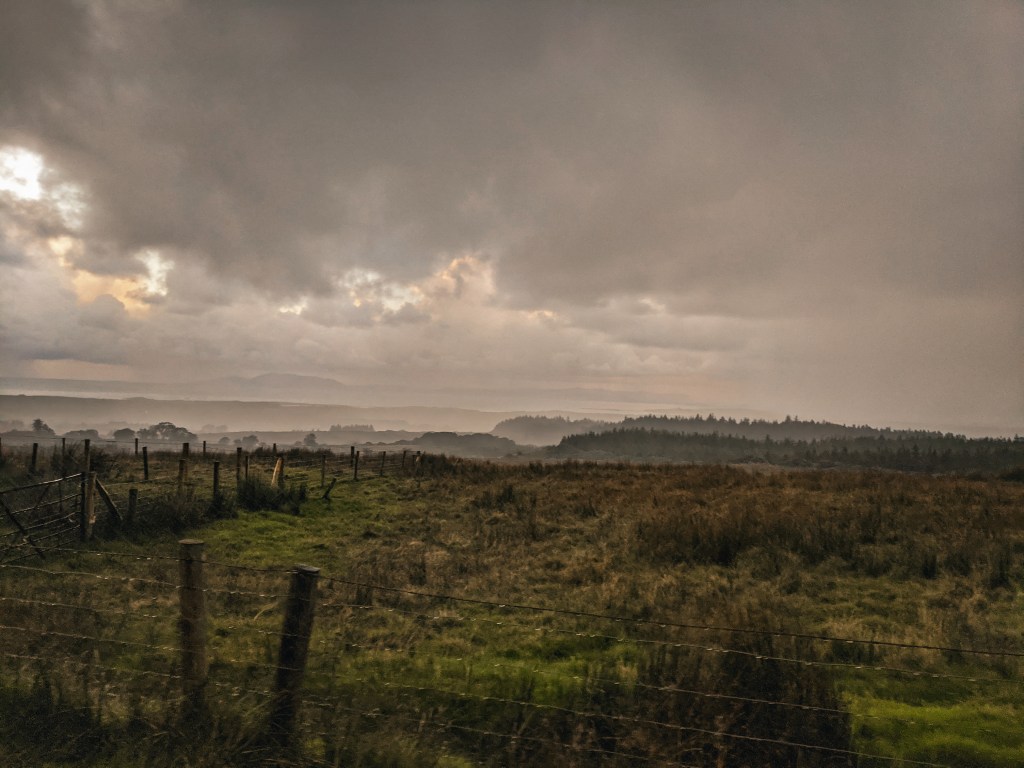
Edwin didn’t hesitate. He took off across the bog in a sort of mad dash, his knees pumping up to his chest, and his arms held high for balance as he plunged through peat-stained pools and over hummocks of Black Bog Rush and Cross-Leaved Heath. Brown water splashed out on either side of him in waves. He appeared for all the world to be delighted with this turn of events, reveling in the adventure of it all. Smack dab in the heart of nature is where Edwin thrives.
I think, growing up, the great outdoors was a refuge for him. Modern society was a stodgy ballroom where he didn’t know the steps, and people had all too often abandoned or disappointed him, but the wild places were forever. Any awkwardness he felt seemed to fall away, and any danger experienced would be between him and God. Now, an adult, this pattern of suffering and retreat still captivates his heart. The way he speaks of the outdoors is the way most close-knit families speak of gathering for the holidays. ‘I’m so excited to see my mother! I can’t wait to go home!” you might hear an ordinary person say. Edwin’s joys and longings come from the smell of damp, dark earth and the feel of a pine-heavy breeze on his face. Nature, more than anything else, has been his family. If he ever takes you into the wild with him, he is taking you home.
The rest of us set off after him. I had a brief, but very specific daydream of myself flying through each obstacle on instinct like a graceful spotted fallow deer. I would catch up to Edwin and we would finish out this perfect day fleet-footed and victorious. Instead, I took a single step and pitched forward, one leg balanced on dry land and the other knee-deep in a wet and previously invisible crevice. Each following step proceeded in a similar fashion despite my best efforts, and I stumble-splatted my way across the bog like Godzilla emerging from Tokyo Bay. My only consolation was that my companions were equally ungainly.
“Oh, God; this is awful,” Dan said, as peat-water oozed into his shoes and up his pants legs.
Alex made a series of “Ah!” sounds and breathy mutterings punctuated by the clap of our joints on submerged stones and logs likely left over from an era when Ireland was covered in as much forest as Appalachia. I thought about the bog bodies then. We could be smashing our way through a veritable sea of corpses and not even know it. If we died here, our bodies would become chestnut-hued handbags. It’s not that I thought death a likely option, but it did make the men in those glass boxes a little more real now that I could vividly picture the scene of their demise.
By the time we’d made it halfway across, Edwin was standing on the far side, cheerfully waving encouragement.
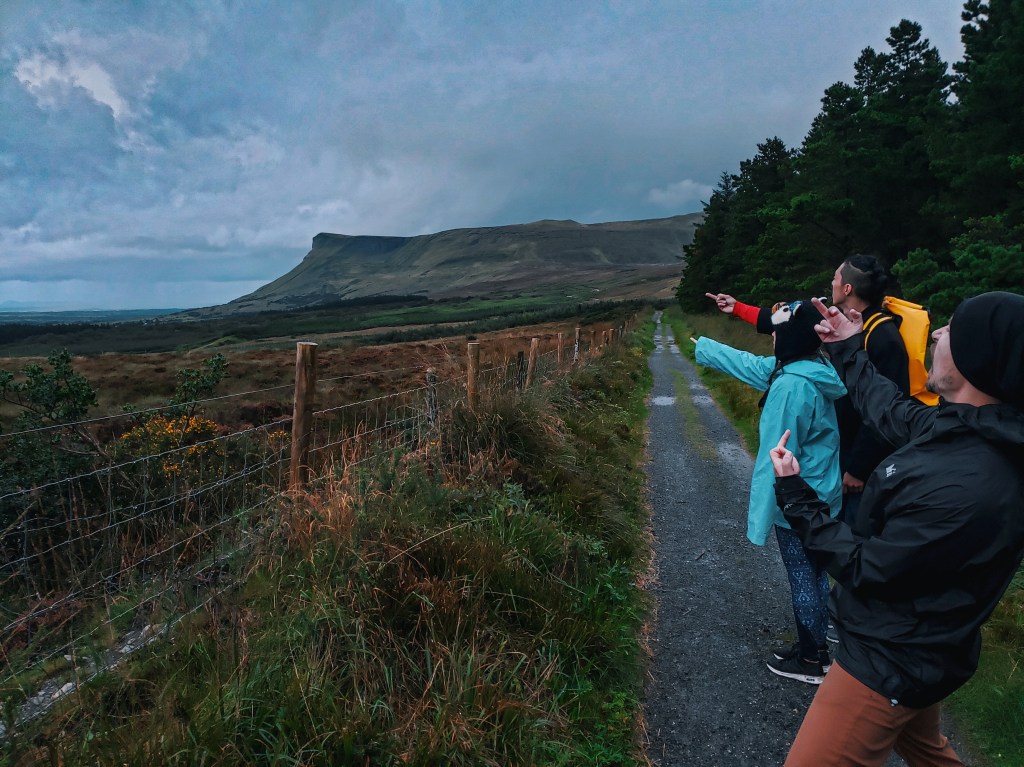
“How did he do that?” we asked each other. The man had positively rolled across every obstacle like a damned Weeble Wobble toy. Every time we tried to pick up the pace, someone would nearly turn an ankle or come perilously close to belly flopping. Edwin chuckled as we staggered one by one onto the Ben Bulben Loop Trail. I have a lovely photograph of the three of them there, roaring their triumph and giving that piece of land the finger. Maybe not our finest moment as North American tourists, but it felt earned at the time.
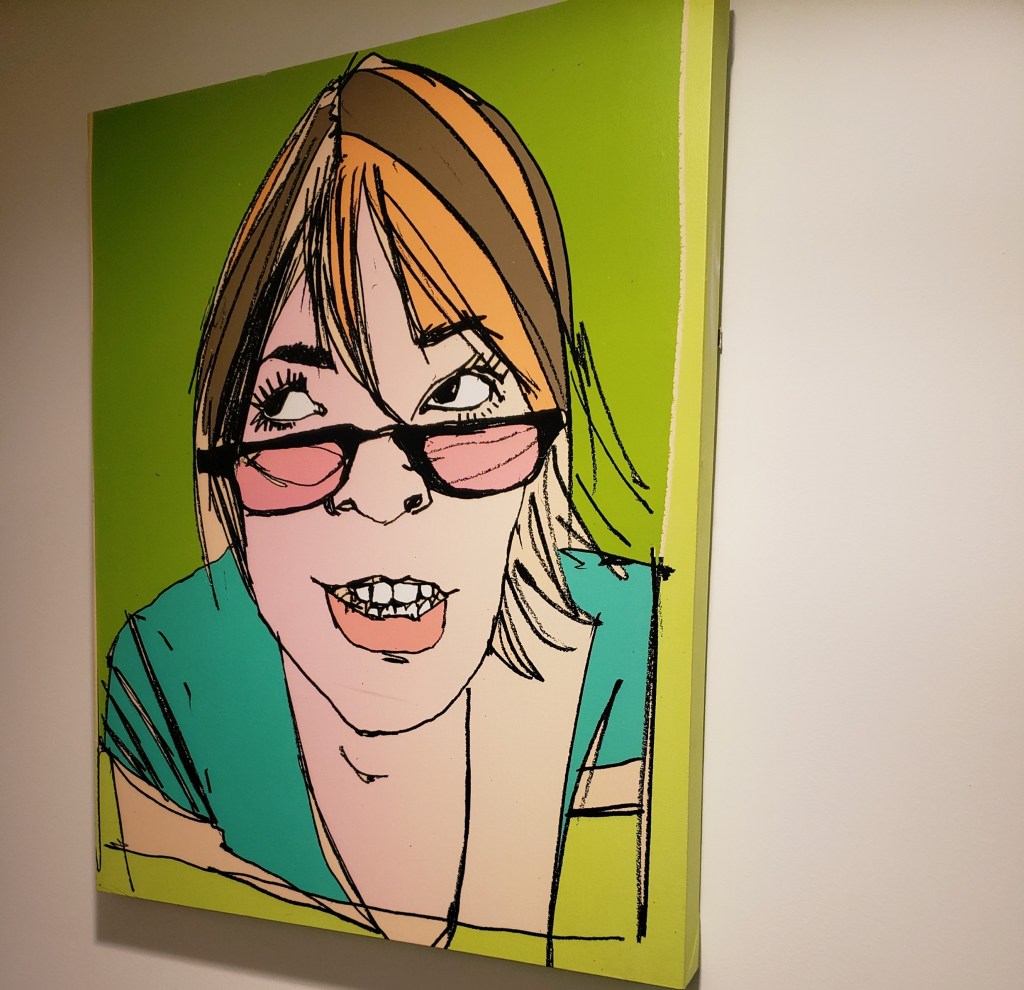
I could go on about the relief of crawling into our dry rental car, smelling of wet human and soggy bog feet. Or about the struggle to find a hotel in Sligo, made humorously confusing by our cold-addled brains and the city’s one-way streets. Or the way we’d squelched across the lobby of a fine hotel that cost more than most of our stays put together, finally falling asleep after late-night Indian food and in rooms that bore large, colorful paintings of human faces in mid-conversation. Their contorted expressions and wide eyes were the stuff of nightmares, but this story isn’t really about Ireland; it’s about the overhaul.
Practical Takeaways That Have Helped Me:
Get into nature and embrace adventure: There is something about nature that brings me into my body while getting me out of my head. Sharing nature with loved ones brings us closer together, and exploring nature alone almost always teaches me something new. It allows me to continue growing and changing in a way that feels good, for lack of better words. I learn every time my life is in upheaval, but it sure as hell doesn’t feel good.
Not that nature is always soft, not at all, but in its harshness lies a balm that I can’t find anywhere else. I don’t believe we were ever designed to live soft lives in safe boxes. We need sunlight and fresh air. We need challenges to overcome and frontiers to explore.
In the 1960s and 70s, Jason Calhoun studied the behaviour of mice and rats in his famous “Utopia” experiments for the National Institute for Mental Health. He provided each “community” with a limitless supply of food, water, nesting materials, and sensory “toys.”
After his twenty-fifth experiment, Esther Inglis-Arkell (a freelance writer and author) wrote:
“At (its) peak… most mice spent every living second in the company of hundreds of other mice. They gathered in the main squares, waiting to be fed and occasionally attacking each other. Few females carried pregnancies to term, and the ones that did seemed to simply forget about their babies. They’d move half their litter away from danger and forget the rest. Sometimes they’d drop and abandon a baby while they were carrying it.
The few secluded spaces housed a population Calhoun called, “the beautiful ones.” Generally guarded by one male, the females—and few males—inside the space didn’t breed or fight or do anything but eat and groom and sleep. When the population started declining the beautiful ones were spared from violence and death, but had completely lost touch with social behaviors, including having sex or caring for their young.”
More recent studies have shown that isolation in the midst of over-abundance, not over-crowding, was more likely responsible for these behaviours. In spite of the number of rats and mice in a “community,” individuals ceased to engage in social activities. They did not groom one another, breed together, or sleep together. They became obese, no longer exploring or taking advantage of exercise equipment like running wheels and climbing ladders and ropes. They began to engage in self-destructive behaviours and developed what could only be called depression, anxiety, compulsions, and chronic diseases.
It doesn’t take a rocket scientist to see the parallels between these “utopias” and modern society in the United States. Fertility rates are at a record low. According to the PEW Research Center, 44% of adults under the age of 49 do not want children, a decrease of 15% in the last ten years. One in six people in the US suffer from mental illness according to NIMH. This number rises to one in four according to Johns Hopkins. The CDC says that 51.8% of adults have at least one chronic disease, a number which is expected to rise by more than 1% each year until 2030. 42.4% of the US is considered obese. According to a 2020 Stanford study, IQ levels on a national scale have dropped by about 3 points a decade, amounting to a loss of 13.5% since 1975. The decrease is not genetic.
We sit in our self-imposed cages, the perfect consumers, and we are dying. Our blood is pooling; our brains are stagnating. In nature, one can often find harmful flora growing near its antidote. Stinging Nettles or Poison Ivy? There is some Jewel-Weed. Death Cap mushrooms? Grab yourself some Milk Thistle. Black Sap plants? Chaka trees even share the same flowers. Are our lives so different? Spending countless hours indoors under and in front of synthetic light, eating synthetic food and drinking synthetic drinks can be stifling. If we want an antidote, the fastest, easiest place to look is right outside our front doors.
Go cross that bog. Climb that mountain. Step in sheep manure full of hallucinogenic mushrooms. Walk back and forth in your driveway for heaven’s sake. Find your frontier and go beyond it. In the words of the poet Dylan Thomas,
“Do not go gentle into that good night,
Old age should burn and rave at close of day:
Rage, rage against the dying of the light.”
 ljfrantzich.com